Famous Estates
Failed Estate Plans of the Stars
Course Pricing
Course Summary
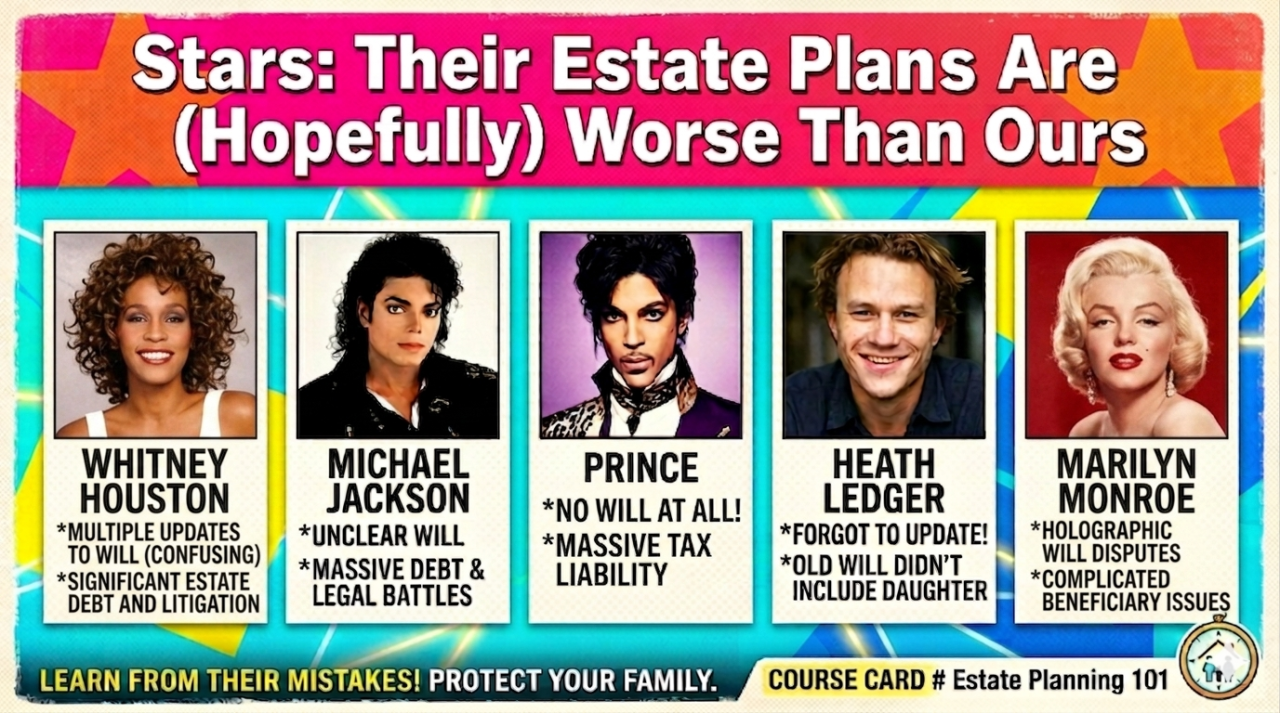
This course leverages the "Celebrity Effect" to explore the intersection of estate planning, probate administration, and the Oklahoma Rules of Professional Conduct (ORPC). While high-profile individuals often control massive estates, their legal failures typically mirror our everyday clients: procrastination, reliance on holographic shortcuts, underfunded trusts, outdated planning instruments, and poor fiduciary selections. Through case studies of iconic figures—such as Prince, Aretha Franklin, Michael Jackson, and Whitney Houston—practitioners will examine the real-world chaos of inadequate planning. More importantly, the course uses these high-stakes disputes to analyze the ethical obligations of drafting and advisory attorneys under the Rules of Professional Conduct.
This course connects celebrity planning failures with specific ethical rules: Rule 1.1 (Competence): Emphasizes the requirement for legal knowledge, thoroughness, and preparation. The course details the attorney’s duty to ask tough questions, build meticulous files for record-keeping, and actively bring in specialists when handling complex assets. Rule 1.2 (Scope of Representation): Explores how to consult with clients to achieve their genuine objectives, noting that clients often fail to understand their own needs. Rule 1.3 (Diligence): Highlights the absolute obligation to act promptly. Practitioners are cautioned against accepting new clients if existing caseloads prevent them from executing and finalizing critical planning documents before a sudden change in client need (e.g. health) occurs. Rule 1.4 (Communication): Uses extreme case studies of outdated estate plans (where family dynamics changed drastically due to subsequent children or heirs struggling with addiction) to outline the ongoing duty of communicating clearly so clients can make informed decisions. It advocates for establishing systematic, annual client check-ins. Rule 2.1 (Advisor): Instructs attorneys to exercise independent professional judgment and render candid advice. This includes the ethical obligation to play "devil's advocate"—warning clients explicitly about how their preferred fiduciary selections or asset distributions could spark structural or familial collapse.
Professional Integrity & Fraud Avoidance: Highlights the absolute boundary of ethical advocacy, warning practitioners against assisting or educating clients in fraudulent asset transfers, referencing historical probate misconduct. The Funding Requirement: Clear instructions on why counsel must ensure clients understand how to properly fund a trust, as an underfunded vehicle fails to avoid public probate.
Instructor Jandra Cox takes these fascinating real-world examples and applies them to the every-day practitioner. It's too late for you to write a will for Michael Jackson, but you have your own important clients. Learn from these high profile mistakes, and plan accordingly.